
Landfill gas management has always relied on a mix of science, industry standards and hard-won local knowledge, and while barometric pressure swings, air intrusions, and the usual hazards of the environment follow patterns any experienced operator can recognize, the day-to-day work of running a wellfield still comes down to catching the right signal at the right time, often across dozens or hundreds of wells that all behave a little differently. Here's where AI, when it's built specifically for this work, can make a meaningful difference for landfill gas operations.
1. AI can replace hours of manual review with a short, specific to-do list.
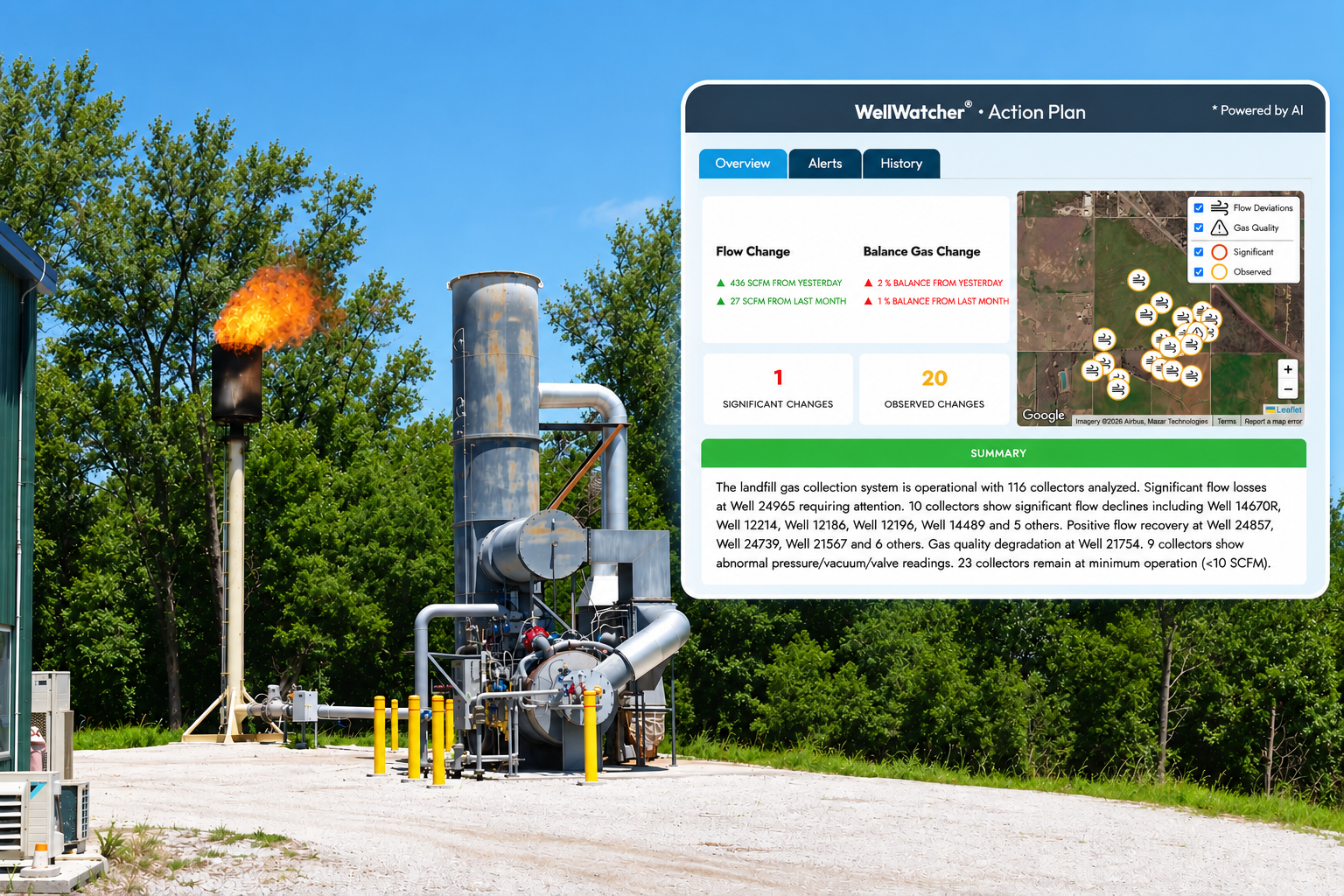
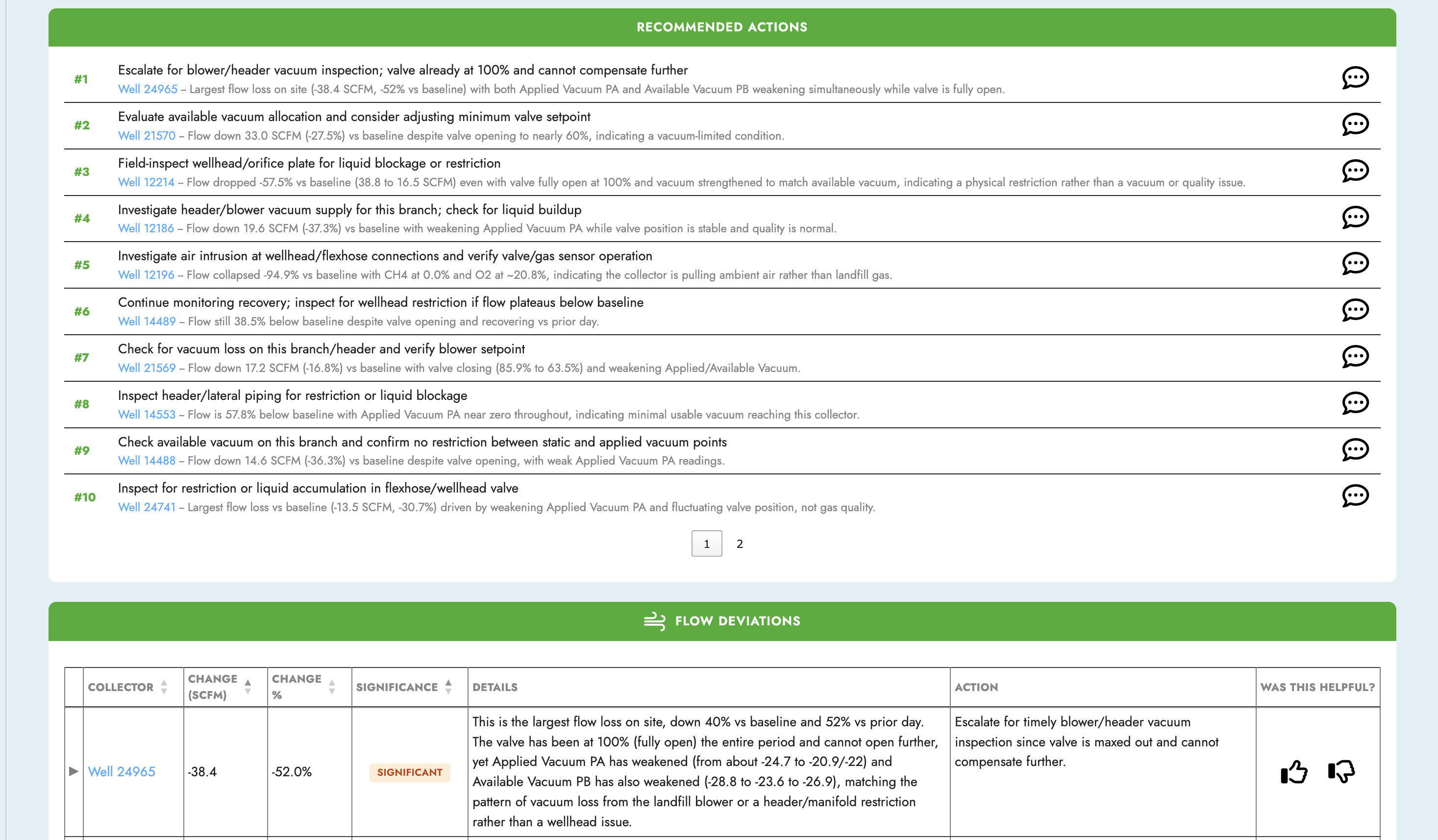
Sites with real-time continuous monitoring generate enormous amounts of data around the clock, and sorting through it to figure out what needs attention on a given day has traditionally taken time most operators don’t have to spare. Since April, we’ve been developing a way for that same real-time data to generate a site-specific action plan, built entirely from that site’s own numbers, so an operator can see at a glance where to focus first instead of combing through raw readings well by well.
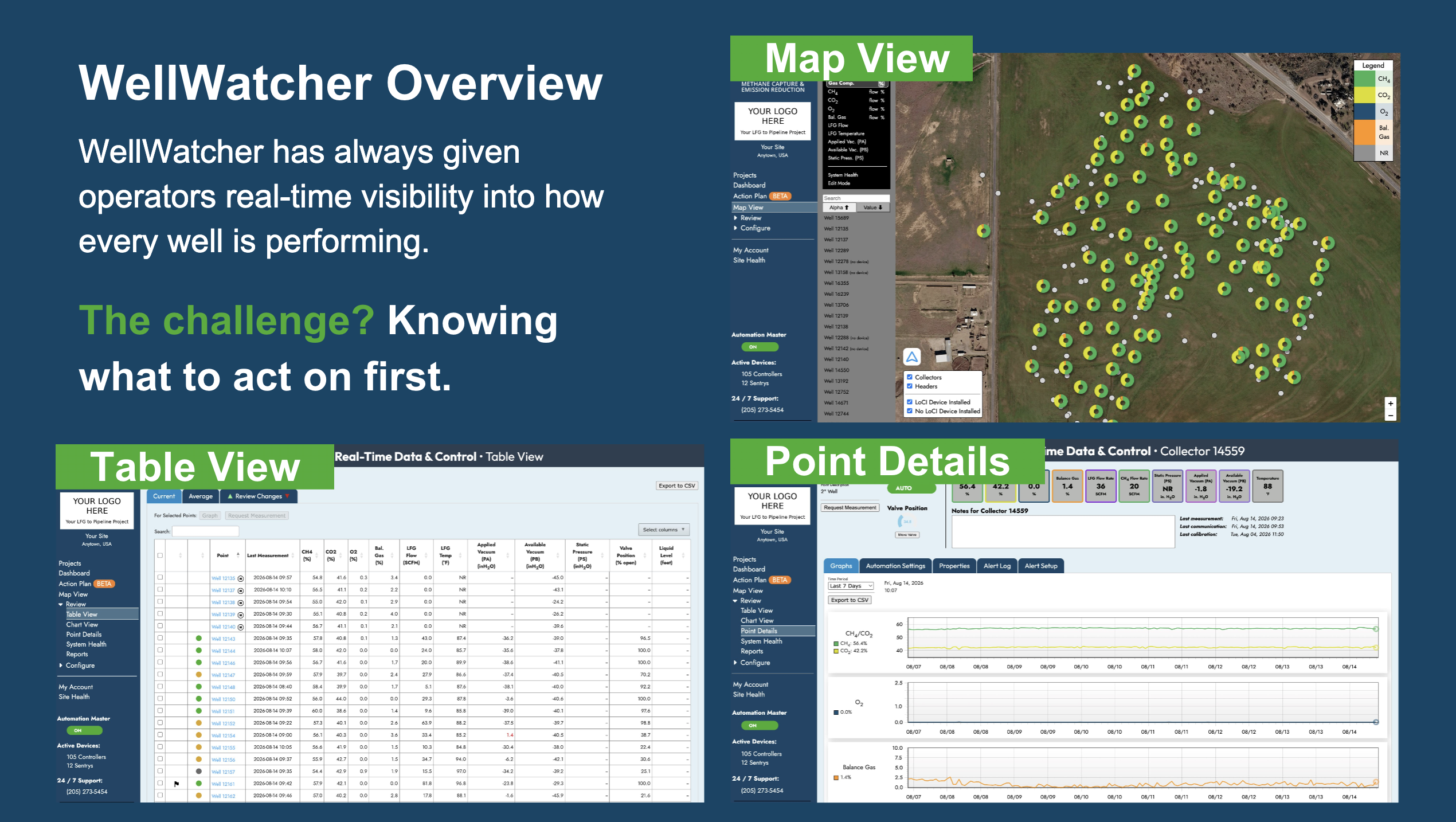
For example, before we introduced AI into our operations, WellWatcher users had several different views to choose from to pinpoint data that could help tell the story of what’s happening in their wellfield on any given day, or even any given hour. While it’s helpful to have all of this data available to reference, sometimes it can create a kind of “death by spreadsheet,” or burnout from looking at so many different data points for so long while trying to determine what actually needs to be reviewed.
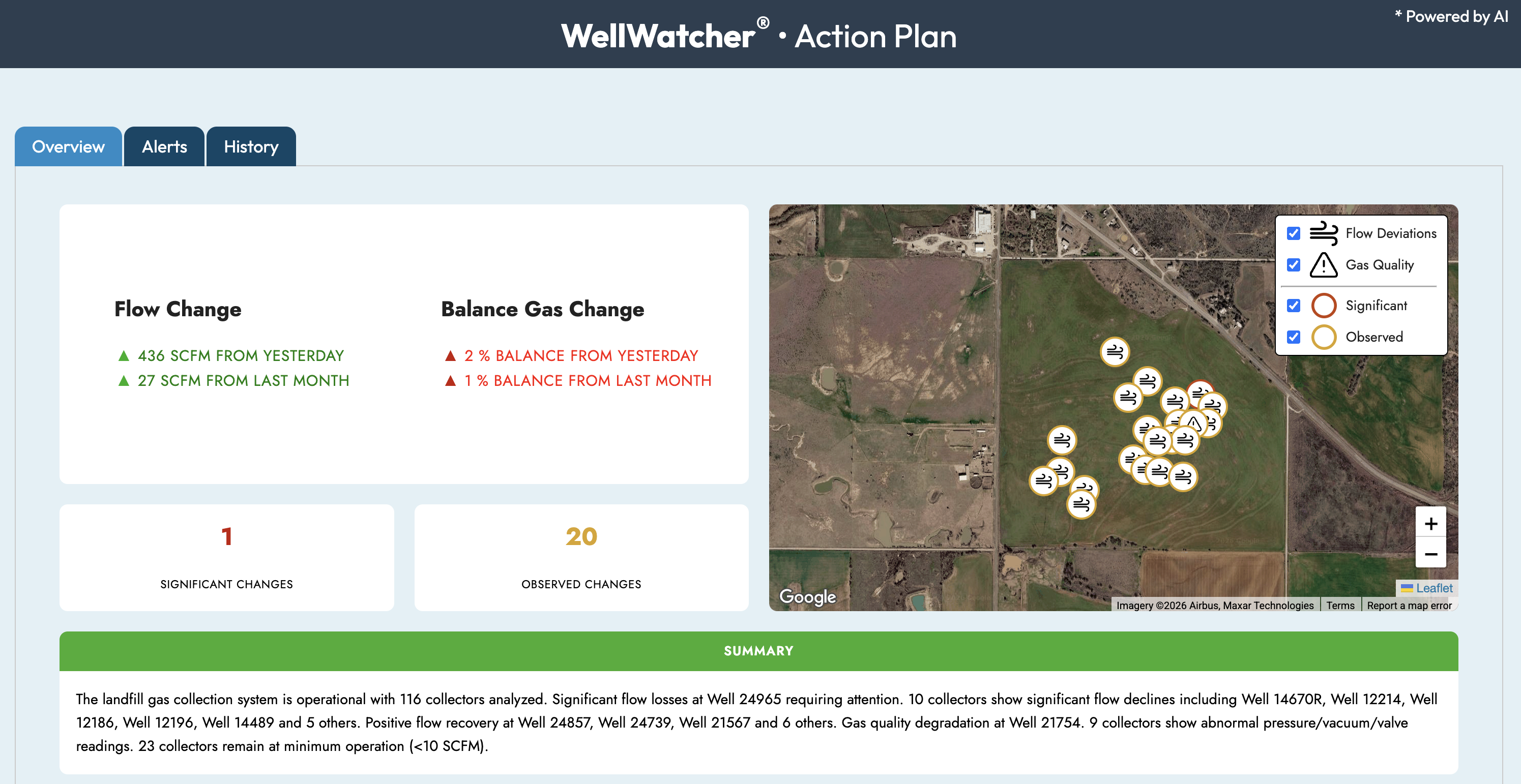
Now, with our WellWatcher AI-powered Action Plan, you can access all of that collected and summarized site-specific data in one place, with the most important findings brought forward to help guide where to focus first.
It’s important to note that this doesn’t replace operator expertise; in fact, the Action Plan includes sections where operators can provide feedback with a thumbs up or thumbs down, as well as leave comments to provide additional context. This keeps the ultimate decision-making capability in the hands of the operators, so if the AI doesn’t understand an issue correctly, the operator’s expertise is put at the forefront and that feedback can be used to help train the model to perform better the next time it encounters a similar situation.
2. AI can catch developing issues before they become larger, expensive ones.
Because the system is watching continuously and comparing current readings against a site’s own historical patterns, it can flag early signs of a problem — an air intrusion, a flow imbalance, a wellhead drifting out of range — Much earlier that it would show up during a routine walk-through.
At one landfill, for instance, the team was seeing a significant impact at their plant, where a 400 scfm flow loss was beginning to affect their gas sales. By checking the Action Plan from that day, they were able to trace that loss back to two horizontal collectors in the active area within minutes, rather than having to search across the wellfield to determine where that flow had gone.
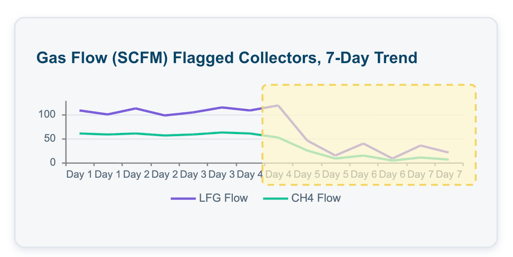
Because those collectors were located in an active area, where bulldozers and other heavy equipment are constantly moving across the site and creating challenging conditions for gas collection infrastructure, the team was able to quickly put the pieces together and determine that the collectors had likely been crushed. With a much clearer understanding of what had happened and where, they could then make their own plans for how to address it, including adding new horizontal collectors in the area in the near term and targeting the area for vertical collectors once it was stable enough to drill.
Since this updated Action Plan rolled out to all customers at the beginning of August, it has helped users address more than 130 issues, analyzed more than 1 million data points, and equipped operators with the information they need to take care of potential issues before they have the chance to become much bigger problems.
3. It gives teams insight into real-time and daily flow trends.
The real-time insights generated by the Action Plan can also catch daily flow trends that might otherwise be missed between manual checks, giving landfill and RNG operators a clearer picture of why a wellfield may have performed better one day than another, whether that change was driven by weather, decomposition, liquids, operational activity, or something else happening across the site.
For example, at one landfill, a single collector showed a fairly sharp uptick in flow and, just as quickly, ticked back down again… a change that likely would have gone unnoticed with manual readings because both the increase and decrease occurred between routine checks. Given that the Action Plan called out the change, the site manager was able to send someone into the field to determine whether it was related to a pump issue, liquid levels, or another condition at the collector, log what was happening, and continue monitoring it to see whether that additional flow could be recovered.
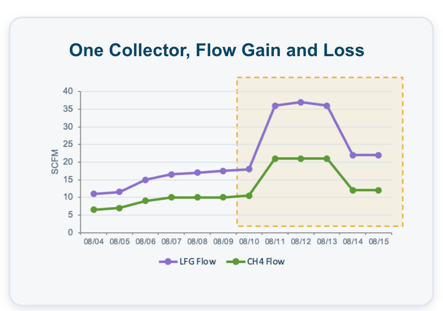
While this particular change wasn’t an immediate problem or cause for concern, it served as a good reminder that wells are finicky, and that some of the most useful information can come from the highs and lows that happen between manual checks. Having AI keep an eye on those changes gives teams another way to stay in tune with their wellfield and identify opportunities to get more out of the gas they’re already collecting.
A Turning Point for Landfill Gas Modernization
The shift from manual data to real-time data, and now from real-time data to actionable insights reflects the way landfill gas operations have continued to evolve alongside the expectations placed on the people managing them. As landfill methane regulations continue to take shape across states and operators face increasing expectations around gas collection, emissions, safety, and performance, the tools they use have to evolve with them.
AI is, at the end of the day, another tool in that toolbox. Built the right way, it doesn’t change what the job requires or replace the experience and judgment of the people doing it; it helps operators make better use of the enormous amount of information their sites are already generating, so they can spend less time searching for what needs their attention and more time acting on it.
Landfill gas operations sit at the intersection of environmental stewardship, energy production, and public health, and the work operators do every day has an impact that extends well beyond the boundaries of their sites. As the industry continues to modernize, the goal should be to give those teams better tools and better information to do that work well, helping their sites perform better, meet a changing regulatory landscape, and ultimately be better neighbors to the communities around them.
See the Action Plan in Action
Want to see what this looks like in practice? Watch our From Data to Action with WellWatcher AI webinar for a walkthrough of the Action Plan and examples of how operators are already using it to make sense of their real-time wellfield data.
Or, if you’d like to learn more about how WellWatcher AI could work at your site, reach out to sales@locicontrols.com.