
A people-first look at how training, ownership, and real-time decision-making helped LoCI log over 221,000 hours with zero lost-time incidents.
When Stevan Jimenez-Ponce starts his day, the first thing he does is say goodbye to the people who remind him why safety matters most: his wife and kids.
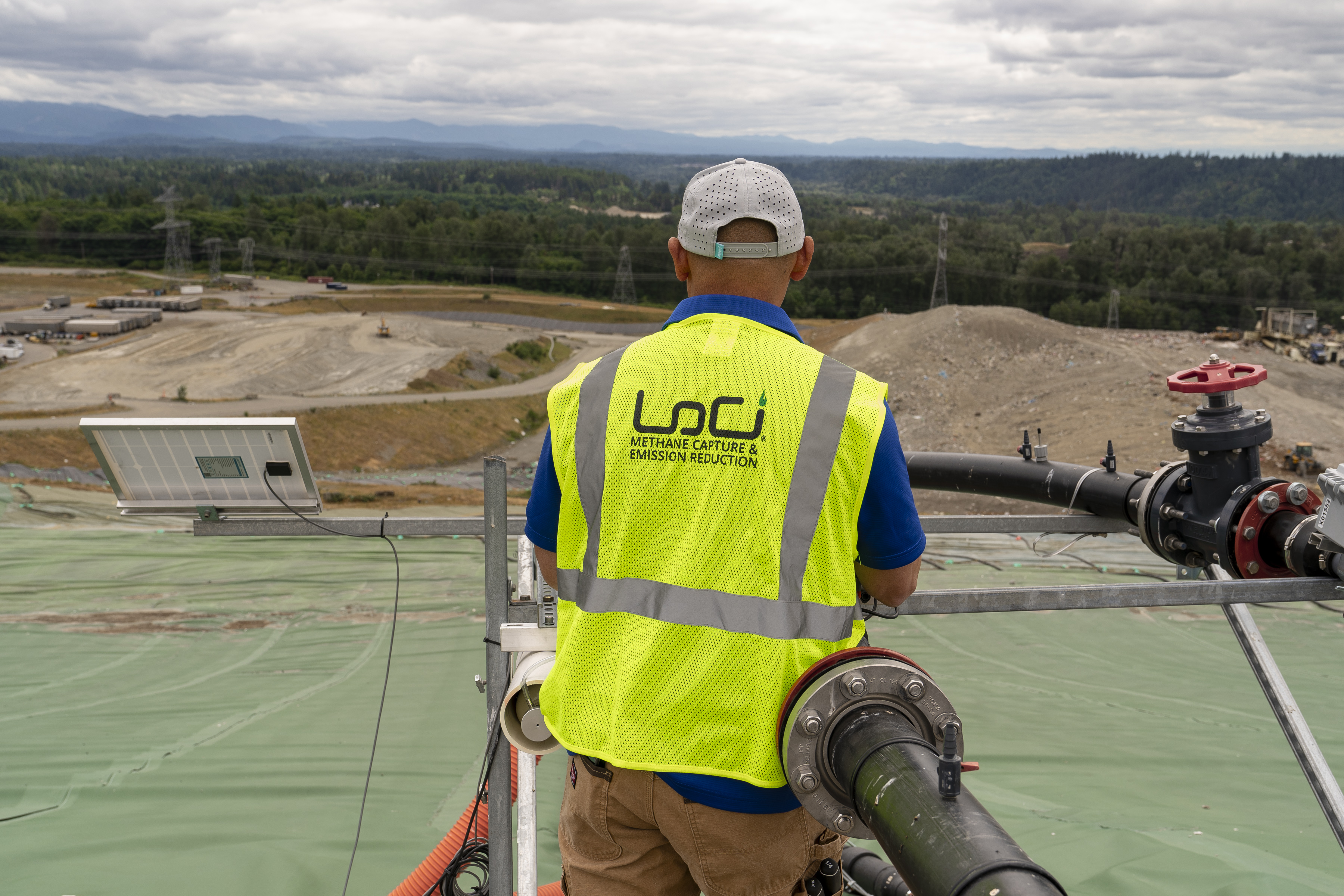
Before the week’s site visits begin, he checks his truck carefully for his hard hat, high-visibility vest, gloves, and most importantly, his 4-gas meter. The meter detects the most common hazardous atmospheric conditions found on landfills, and it’s a non-negotiable part of his work. Much of Stevan’s job is done solo, across sites in different climates and conditions, which means staying alert is part of the job description.
“Safety hazards are just a fact of life on landfills folks operate every day,” Stevan says. “But getting hurt doesn’t have to be.”
Landfills are inherently challenging environments. Heavy machinery moves constantly, creating risks from compactors and loaders. Slopes can be unstable and steep. Debris, like broken glass, metal, needles, can be hidden underfoot. Even getting to a site can be dangerous, with early mornings, night shifts, icy roads, wildlife, and long travel days all adding risk before work even begins. For a company like LoCI, which works across diverse sites and geographies, safety is foundational to running smoothly.
A Record Built on Intentionality
Over the past nine years, LoCI has logged more than 221,090 man-hours with zero lost-time incidents. That means no OSHA-recordable workplace injuries or illnesses.
For customers, this means LoCI teams arrive prepared, work efficiently, and are never a liability on site. For employees, it means knowing they can work in demanding environments and still make it home safely to their families.
“When you’re on a landfill (especially servicing a LoCI client) you want to be productive,” says Field Service Representative Shane Diebel. “But that often means having the discipline to slow down. You can’t finish a job if you don’t do it safely. We want customers to know we’re not putting them at risk by being on their site.”
Training That Shows Up When It Matters
Safety at LoCI isn’t limited to fieldwork. It’s reinforced across the organization. From analysts who begin weekly meetings with safety reminders, to field representatives who receive at least quarterly training tied to annual, forward thinking safety initiatives.
Sometimes that training pays off immediately. Other times, it’s something employees carry with them for life, like CPR or hazard response skills.
“I can’t think of anything LoCI doesn’t do to support us,” says David Cooper. “If you need new boots, gloves, extra time on the road because conditions are unsafe, it gets approved. Everyone encourages you to ask for what you need to stay safe.”
That support shows up in real-world moments.
One field representative recalls loosening a worm clamp that appeared routine until built-up stress caused it to snap back violently. The clamp struck his safety glasses, slicing through them. Without eye protection, the injury would have been severe.
Another rep describes working on a well when his gas meter alarmed. He noticed himself starting to feel lightheaded. Instead of pushing through, he waited for wind conditions to change, reassessed the site, confirmed the hazard had cleared, and only then completed the work.
In other cases, safety means knowing when to walk away entirely.
“There was one project we chose not to move forward with,” explains Director of Operations, Tom Lindsay. “The slope conditions were unusually steep, and after careful evaluation we determined it wasn’t the right situation for any team to work in safely. In cases like that, we always prioritize safety—for our people and for our customers.”
Creativity in Service of Safety
Some sites require creative problem-solving to work safely. During a winter installation, icy slopes made footing treacherous. Dropped tools would slide to the bottom of the landfill.
 The solution? Using large plastic sleds to lower toolboxes and devices down the slope, then pull them back up, reducing risk and keeping work controlled.
Brian, a Senior LoCI field Representative with over eight years at the company, has seen this mindset consistently.
“Whether it’s choosing to walk an extra hundred feet instead of driving on an unstable slope, or waiting out a rainstorm with lightning risk, our team makes the safest decision to get the job done,” he says. “I’ve also seen situations where we identified hazards on site and notified operators before they became serious problems.”
A Culture That Feels Like Family
At LoCI, safety is personal and often familial.
David Cooper was encouraged to join the company by his brother Mark, who also works at LoCI, after seeing how seriously safety was taken.
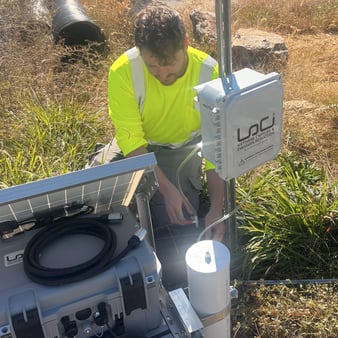
“My brother works at LoCI, but that sense of family extends well beyond relatives,” Mark said. “We all know each other’s families, and that care shows up in how seriously we take safety. Everyone looks out for one another, especially the newest employees.”
Director of Operations Tom Lindsay has helped embed that culture as the company has grown. All representatives are asked to check in when they arrive on site and again when they leave. That practice has scaled organically across teams.
Monthly safety calls bring reps together to share near-misses, review seasonal risks like heat stress or icy conditions, and discuss real scenarios from the field. LoCI also shares weekly safety bulletins and refreshes training annually to prevent complacency.
“We own our safety,” Tom says. “It’s a mindset. Safety first, always.”
For our customers, safety directly affects reliability, timelines, and confidence in the work happening on site. Since LoCI began work at Klickitat in 2021, our teams have operated across extreme heat, winter conditions and seven-day-a-week service schedules without a single safety incident. As Douglas Strathdee, a Landfill Gas Lead for Klickitat put it, “In the 4.5 years since installation, LoCI has had zero safety issues across extreme weather and terrain conditions. I would attribute this to not only the personal responsibility taken by the techs but also to management that has a healthy safety culture with a ‘Safety First’ attitude.” Even as technicians cycle through projects, that consistent safety culture helps ensure work is completed efficiently, disruptions are minimized, and customers can stay focused on their mission.
Making It Home Matters Most
When Stevan’s truck rolls back in at the end of a long day, there’s comfort in knowing his family doesn’t have to worry. When David calls his brother from the field, he knows he has the training and support to handle whatever comes up. When Tom oversees teams across the country, he trusts them to make the right call.
As LoCI begins another year of work on landfills across North America, we remain committed to what has carried us this far: a safety culture rooted in ownership, care, and the belief that everyone deserves to make it home.